

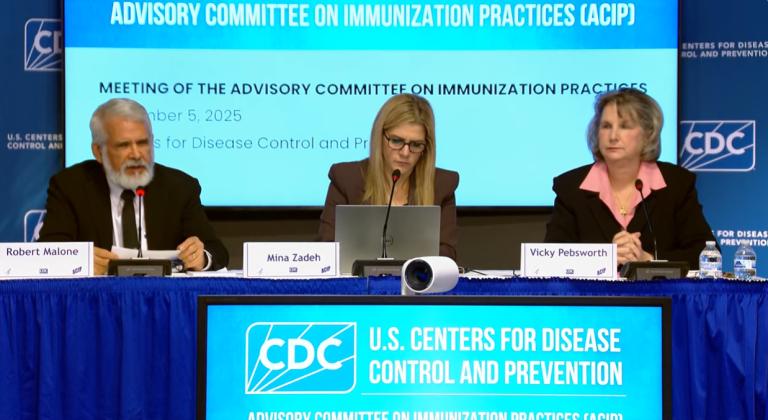
The Advisory Committee on Immunization Practices (ACIP) has voted 8 to 3 in favor of ending the universal recommendation for routine hepatitis B (HepB) vaccination for infants under two months of age. This move marks a significant shift in longstanding public health policy. It means that the routine administration of the HepB vaccine at birth or within the first two months of life may be discontinued if the Centers for Disease Control and Prevention (CDC) director approves the recommendation.
Background on HepB Vaccination
Since the 1990s, infants in the United States have routinely received the hepatitis B vaccine shortly after birth, a recommendation aimed at curbing perinatal transmission of the virus. The universal approach was adopted to reduce rates of chronic hepatitis B infection and subsequent liver disease by ensuring all infants receive early protection, regardless of identified risk factors.
ACIP’s New Recommendation
During the ACIP’s latest meeting, committee members debated the scientific evidence and public health implications associated with the current universal infant vaccination policy. Ultimately, the committee voted 8 to 3 to end the blanket recommendation for HepB vaccination in infants under two months old, suggesting a targeted approach may be more appropriate based on evolving epidemiological data and risk profiles.


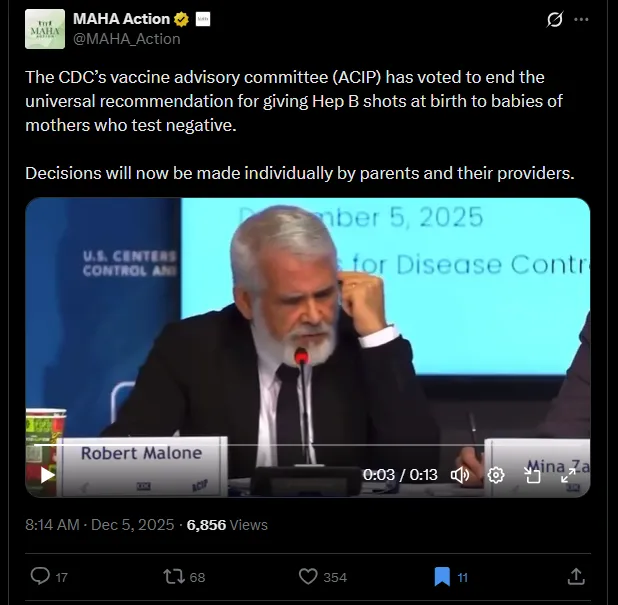
The voting language approved by the committee states: “For infants born to HBsAg-negative women: ACIP recommends individual-based decision-making, in consultation with a health care provider, for parents deciding when or if to give the HBV vaccine, including the birth dose. … For those not receiving the HBV birth dose, it is suggested that the initial dose is administered no earlier than 2 months of age.”
Next Steps
The ACIP’s recommendation will not be implemented unless it receives formal approval from the CDC director and Health and Human Services Deputy Secretary Jim O’Neill. The director will review the committee’s vote and supporting evidence before issuing a final decision. Until then, the existing universal infant HepB vaccination guidance remains in effect.
“The American people have benefited from the committee’s well-informed, rigorous discussion about the appropriateness of a vaccination in the first few hours of life,” said Deputy Secretary of Health and Human Services and CDC Acting Director Jim O’Neill.
Public Health Implications
If the recommendation is approved, it would alter standard pediatric vaccination schedules across the nation. Advocates for universal coverage warn that ending the broad recommendation could increase the risk of missed cases of hepatitis B, especially in populations less likely to undergo risk-based screening. Supporters of the change, however, argue that a more targeted approach could improve resource allocation and focus intervention efforts on groups most at risk.
This is a developing story. Please check back with Doctor TV Channel for regular updates.


